
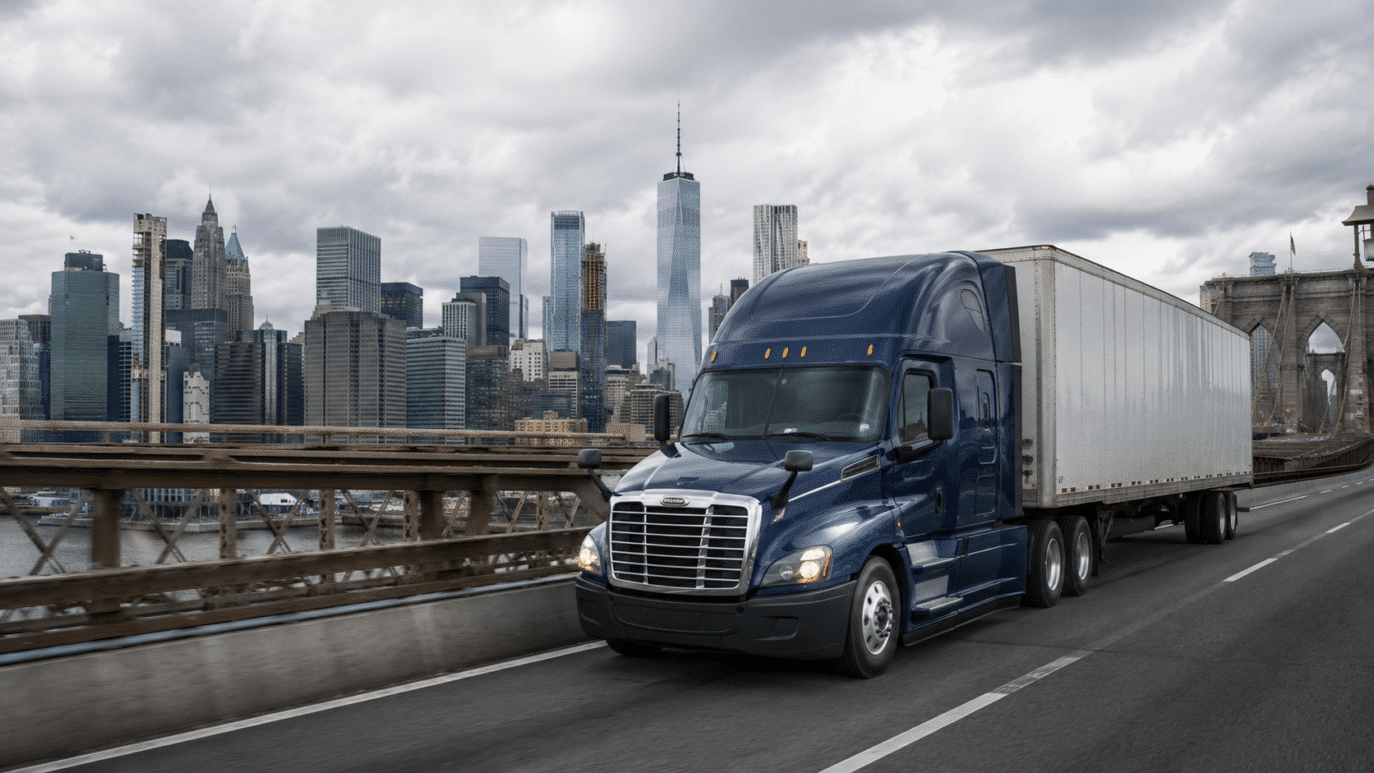
Workers comp insurance for NY trucking companies is more complex than most fleet owners expect. The risk is not just the job itself. It is the geography.
When your drivers live in New Jersey or Connecticut, run routes across state lines, or work alongside a mix of employees and owner-operators, a standard New York workers comp policy may not be built for how your business actually operates. Here is what NY trucking and transportation companies need to know to make sure their coverage matches their exposure.
Why Multi-State Operations Create Coverage Gaps
Under workers compensation law, an injured employee generally has the right to file a claim in either the state where the injury occurred or their state of residence, and in some circumstances both. For a New York-based fleet operator with drivers who live in NJ or CT, that means a single policy written exclusively under New York guidelines may leave gaps when a covered employee is hurt outside of New York.
The injured worker will typically file in whichever state pays the better benefit. If your policy is not structured to account for that, you can find yourself with a coverage dispute on top of an active claim. That is exactly the situation a properly placed policy is designed to prevent.
This is not a fringe scenario. Many NY-based trucking companies employ drivers who commute from across state lines, and the volume of tri-state freight traffic means out-of-state incidents are a routine exposure, not an edge case.
The Owner-Operator Classification Problem
The worker classification question is particularly consequential in trucking. Owner-operators are frequently classified as independent contractors rather than employees. If that classification is later challenged following a workplace injury, which happens more often than most fleet operators expect, the company can face retroactive liability for workers comp claims it assumed were covered by someone else’s policy.
Carrier selection and policy structure matter significantly here. The right broker does not just quote the lowest rate. They review how your workforce is actually classified and flag exposures before they become claims.
Workers Comp Class Codes for NY Trucking Companies
New York assigns specific class codes to trucking operations that directly determine your base rate per $100 of payroll. Getting the right codes in place and making sure payroll is split accurately across them is one of the most direct ways to control costs.
Common trucking class codes in New York include local delivery drivers, long-haul operators, specialized haulers, and warehouse and distribution workers. Each carries a different rate, and misclassifying employees across these categories can result in thousands of dollars in unnecessary premium or unexpected audit adjustments.
For a full side-by-side comparison of current NYSIF rates versus private market alternatives across more than two dozen NY trucking classifications, current rate tables are available at bit.ly/trucking-workers-comp-rates-ny. Private market options consistently run 12 to 14 percent below NYSIF rates across major trucking classifications, with savings in some cases reaching up to 28 percent off manual rates.

Strategies to Reduce Workers Comp Costs for NY Trucking Companies
- Review your multi-state exposure before renewal. If your drivers live or regularly work in NJ or CT, ask your broker specifically whether your policy addresses out-of-state injury filing rights.
- Audit your owner-operator classifications. Confirm that 1099 workers have their own valid workers comp coverage. If they do not, your policy may be exposed.
- Segment payroll by class code. Do not default your entire workforce to a single trucking code. Office staff, dispatchers, and warehouse workers carry lower rates than road drivers and should be classified separately.
- Consider pay-as-you-go billing. For trucking companies with variable crew sizes or seasonal volume, pay-as-you-go workers comp links your premium directly to actual payroll rather than an annual estimate. It removes the upfront deposit and eliminates end-of-year audit surprises.
- Shop coverage before renewal. Rates vary significantly by carrier for trucking risks. An independent broker who specializes in NY transportation risks can access markets that general brokers cannot.
Frequently Asked Questions: Workers Comp for NY Trucking Companies
Do NY trucking companies need workers comp if they only use owner-operators?
It depends on how those owner-operators are classified. If they are truly independent contractors with their own valid workers comp coverage, your liability may be limited. However, if a classification is challenged after an injury, or if their coverage lapses, your business can be held responsible. Always collect current certificates of insurance from every 1099 worker and verify coverage before work begins.
What happens if one of my drivers gets injured in another state?
The injured worker typically has the right to file in the state where the injury occurred or their state of residence, whichever provides better benefits. If your policy is written exclusively under New York guidelines, it may not respond fully to an out-of-state claim. A properly structured tri-state policy or endorsement addresses this exposure directly.
How much does workers comp cost for a trucking company in New York?
Rates vary significantly by classification, payroll size, claims history, and carrier. Private market options typically run 12 to 14 percent below NYSIF rates, with some accounts saving up to 28 percent off manual rates depending on loss history and classification structure.
Ready to Protect Your Fleet?
NY, NJ, and CT trucking and transportation companies can request a free multi-state workers comp analysis at (212) 947-4298 or review current trucking rates at bit.ly/trucking-workers-comp-rates-ny.