
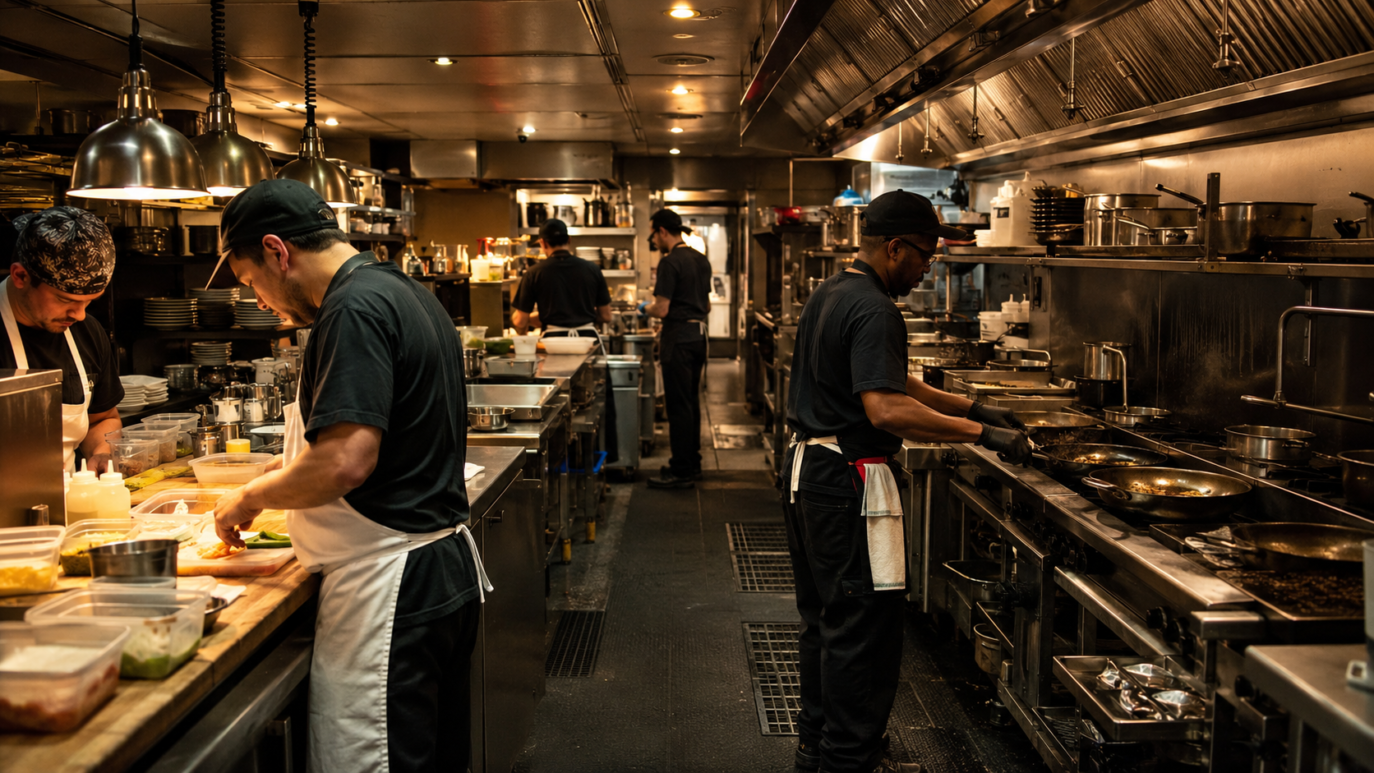
New York City restaurants operate in one of the most demanding workers compensation environments in the country. High employee turnover, fast-paced kitchen conditions, delivery operations, and NYC’s elevated medical costs all drive claims frequency and cost above the national average. For restaurant owners across Manhattan, Brooklyn, Queens, the Bronx, and Staten Island, getting workers comp right is not optional and it is not simple.
This guide covers workers comp insurance for NYC restaurants and what owners need to know about workers comp class codes, current rates, common coverage mistakes, and how to reduce premiums without cutting corners.
New York Uses Different Restaurant Class Codes Than Every Other State
Most states use class code 9082 for full-service restaurants. New York does not. The New York Compensation Insurance Rating Board (NYCIRB) assigns its own codes that apply exclusively within the state.
Class Code 9071 covers full-service restaurants, buffet-style establishments, banquet halls, cafes, diners, and any food establishment that provides table service. This is the most common code for NYC restaurants. It is an all-inclusive classification meaning it applies to all restaurant employees regardless of job function, including servers, cooks, kitchen staff, dishwashers, and managers. Clerical and office employees can be separately classified under Code 8810, but only if their workspace is physically separated from the restaurant.
Class Code 9072 applies to fast food establishments and quick-service restaurants where food is prepared and served at a counter without traditional table service. This is a New York-specific code. Most other states use 9083 for fast food.
Class Code 9074 applies to restaurants where 30 percent or more of revenue comes from alcohol sales. Bars, taverns, and nightclubs that meet this threshold fall under 9074, which carries a higher rate than 9071 due to elevated risk.
Class Code 9058 applies to restaurants owned and operated by a hotel or motel, covering hotel food service employees including servers, cooks, kitchen help, bartenders, cashiers, and restaurant managers.
Getting the correct code matters because misclassification directly affects your premium. A full-service restaurant incorrectly classified under a bar code will overpay on every policy dollar.
New York is one of a handful of states that does not use the National Council on Compensation Insurance (NCCI) system. Instead, the state operates through NYCIRB, which sets its own base rates, class codes, and experience modification calculations independently. This is why a restaurant owner who relocates from another state or uses an out-of-state broker unfamiliar with NYCIRB may end up misclassified from day one.
| Class Code | Restaurant Type | Approximate NYSIF Base Rate |
|---|---|---|
| 9071 | Full-service restaurant | $4.00-$4.50 per $100 payroll |
| 9072 | Fast food / quick service | $4.00-$4.50 per $100 payroll |
| 9074 | Bar / alcohol-majority (30%+) | Higher rate — varies by carrier |
| 9058 | Hotel-operated restaurant | Varies — separate hotel rate schedule |
| 8810 | Clerical / office staff | Significantly lower — confirm with broker |
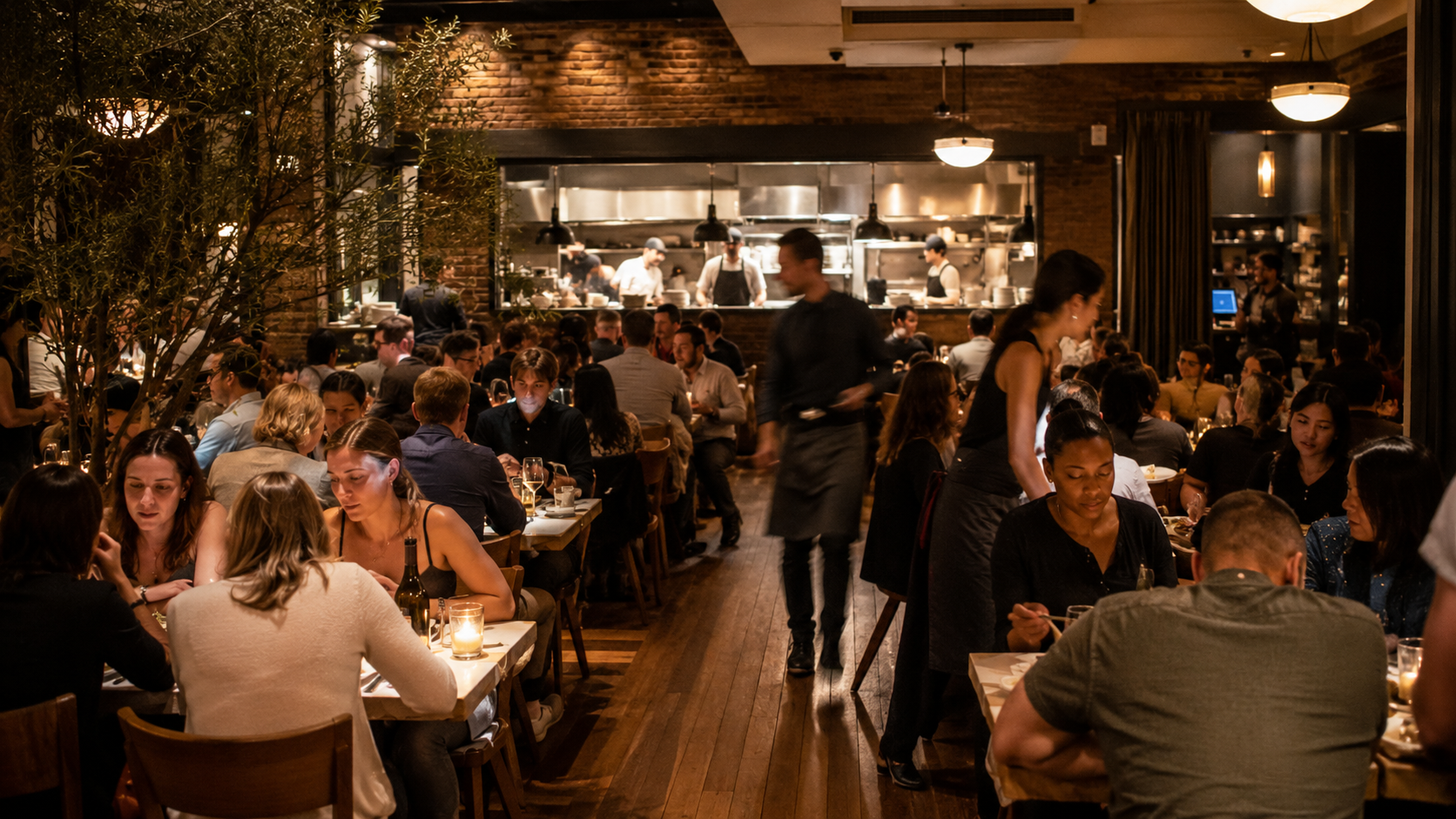
Workers Comp Insurance for NYC Restaurants: What it Costs
Restaurant workers comp rates in New York are set by NYCIRB and updated annually on October 1. The base rate for class code 9071 runs approximately $4.00 to $4.50 per $100 of payroll through NYSIF. Private market carriers apply their own Loss Cost Multipliers to the NYCIRB base rate, which means rates vary by carrier and can run meaningfully below NYSIF for qualifying accounts.
For a full-service restaurant with $500,000 in annual payroll, that translates to a premium range of roughly $20,000 to $22,500 before experience modification adjustments. Restaurants with strong safety records and low claims history may qualify for schedule credits that reduce this further.
Manhattan restaurant accounts have historically been more difficult to place in the private market due to carrier concerns about terrorism exposure on ground-floor storefronts and the elevated injury costs associated with high-volume NYC kitchens. An independent broker with access to multiple A-rated carriers can navigate this in ways a direct-to-NYSIF approach cannot.
The NYC Restaurant Injury Profile
NYC restaurants face a specific injury pattern that drives claims costs above the national restaurant average. The five most common injury categories are:
- Slips and falls — wet floors, grease spills, and cluttered delivery areas account for a significant share of claims, particularly in high-volume kitchens during rush periods
- Cuts and lacerations — knives, slicers, and broken glassware are the most common source of injuries in prep and service areas
- Burns and scalds — steam exposure, hot liquids, and contact with cooking surfaces are particularly prevalent in open-kitchen formats
- Back and lifting injuries — heavy stock deliveries, repetitive motion in prep stations, and carrying trays are the costliest claim category by average settlement value
- Delivery driver injuries — NYC restaurant delivery operations face a unique exposure because drivers navigating Manhattan traffic, bicycle lanes, and building access points are covered under the restaurant workers comp policy if they are W-2 employees
Injury frequency in NYC restaurants is not evenly distributed across the year. According to claims data analyzed by AmTrust Financial Services, restaurant workers comp claims peak in July and reach their lowest levels in January, February, September, and November. For NYC restaurant owners hiring seasonal staff or ramping up summer crews, this pattern means the highest-risk period coincides exactly with peak payroll. Owners who have not reviewed their coverage before summer hiring begins are entering their most expensive claims window without a current policy review.
The delivery driver classification is where many NYC restaurant owners have an unaddressed exposure. App-based delivery platforms like DoorDash, Uber Eats, and Grubhub classify their drivers as independent contractors, which generally excludes them from employer-provided coverage. However, if a restaurant employs its own delivery staff on payroll, those employees must be covered and should be reported under a separate classification from kitchen staff.
Owner and Officer Coverage in NYC Restaurants
Restaurant ownership structure directly affects workers comp requirements in New York. If the owner or partners are actively working in the restaurant as chefs or managers, they are automatically placed under the predominant classification code, typically 9071. New York allows corporate officers to exclude themselves from coverage, but only up to two officers in the case of a corporation. LLC members and partners are automatically excluded from coverage unless they elect to be included.
Getting this wrong on an audit creates retroactive premium liability. An owner who did not properly file for exclusion and is later audited may owe back premiums on their own compensation going back to the policy start date.
How NYC Restaurant Owners Can Lower Their Workers Comp Premiums
- Verify your class codes before renewal. If your restaurant does not serve alcohol or serves less than 30 percent of revenue in alcohol, confirm you are not classified under 9074. If you have clerical staff in a physically separated office, confirm they are under Code 8810.
- Implement a documented safety program. Slip-resistant mats, knife safety protocols, and a formal injury reporting procedure reduce claim frequency and improve your Experience Modification Rate over time.
Your Experience Modification Rate, or EMR, is a multiplier calculated by the Workers Compensation Board that adjusts your premium based on your actual claims history compared to businesses of similar size and type. An EMR below 1.0 reduces your premium. An EMR above 1.0 increases it. For a NYC restaurant with $20,000 in annual premium, the difference between an EMR of 0.85 and 1.15 is $6,000 per year.
- Require certificates of insurance from subcontractors. If you use outside catering staff, cleaning crews, or equipment maintenance vendors, require current COIs before they enter your establishment. Uninsured subcontractors become your liability under a workers comp audit.
- Consider pay-as-you-go billing. NYC restaurants have highly variable staffing from season to season. Pay-as-you-go workers comp ties premiums to actual payroll rather than an annual estimate, eliminating deposit requirements and end-of-year audit surprises.
- Shop the private market before renewing with NYSIF. NYSIF accepts all eligible New York employers but its rates are not always the lowest available. Private A-rated carriers competing for restaurant accounts can offer lower rates for establishments with clean loss histories.
NYC-Specific Workers Comp Compliance for Restaurant Operators
Beyond New York State requirements, NYC restaurant operators face additional compliance layers. The NYC Department of Buildings requires proof of workers comp coverage before issuing permits for renovation or construction work on restaurant premises. Many commercial landlords in NYC also require a certificate of insurance naming them as an additional interested party as a condition of the lease. Restaurateurs should maintain a current certificate on file and update it at every policy renewal.
Frequently Asked Questions: Workers Comp Insurance for NYC Restaurants
Do NYC restaurants need workers comp for part-time employees?
Yes. New York State requires workers compensation coverage for any business with at least one employee, including part-time, seasonal, and temporary workers. There is no minimum hours threshold. A restaurant that employs even one part-time dishwasher on payroll is required to carry coverage.
What is the penalty for not having workers comp as a NYC restaurant owner?
New York State imposes fines of up to $2,000 for every 10 days a business operates without required coverage, plus civil penalties up to $50,000. The Workers Compensation Board can issue a stop-work order shutting down the restaurant until compliant coverage is obtained. Business owners are also personally liable for all medical costs and lost wages from any employee injury during the uninsured period. A restaurant operating without coverage for 60 days could face fines of $12,000 before any civil penalties are applied.
How does alcohol sales percentage affect workers comp class codes in New York?
In New York, restaurants where 30 percent or more of total revenue comes from alcohol sales are classified under Code 9074 rather than 9071. Code 9074 carries a higher rate reflecting the elevated risk profile of establishments with significant alcohol service. Restaurants below the 30 percent threshold remain under 9071 regardless of whether they serve alcohol.
Can NYC restaurant delivery drivers be covered under the restaurant workers comp policy?
Yes, if the drivers are W-2 employees of the restaurant they must be covered and reported under a delivery driver classification rather than the 9071 restaurant code. App-based delivery drivers classified as independent contractors are generally not covered under the restaurant policy, though this classification is subject to legal challenge in New York and is an active compliance issue for operators using third-party delivery platforms.
Ready to Lower Your Restaurant Workers Comp Costs?
NYC restaurant owners can request a free workers comp review or competitive quote at (212) 947-4298 or review current restaurant rates at enforcecoveragegroup.com/restaurants.